
Question-and-Answer Resource for the Building Energy Modeling Community
 | 1 | initial version |
Not sure the following answers all of your questions.
Taken from the EnergyPlus Engineering Reference, the following example breaks down time-varying environmental boundary conditions and material properties that affect glazing node/surface temperatures at each time-step. Glazing material conductivities (k1, k2 in the example) are most definitely taken into consideration.
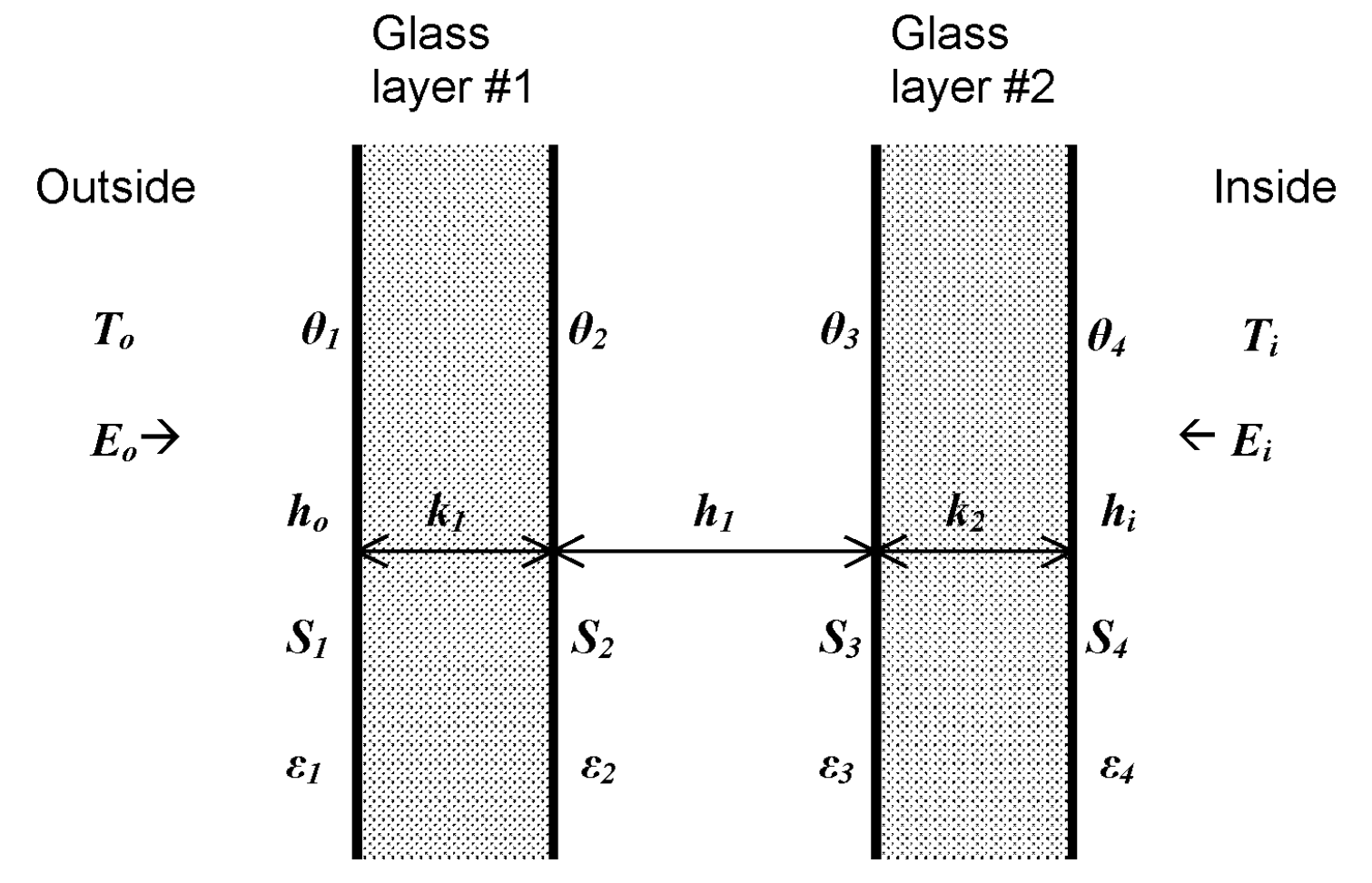
Let's take face S2. At any time step, its temperature will of course be affected by the glass layer conductivity (k1), but also by interpane gap convection and long-wave radiation, which are all ~simultaneously influenced by outside vs inside environments. And this is a simple example (no sun). Becomes more complicated with solar:
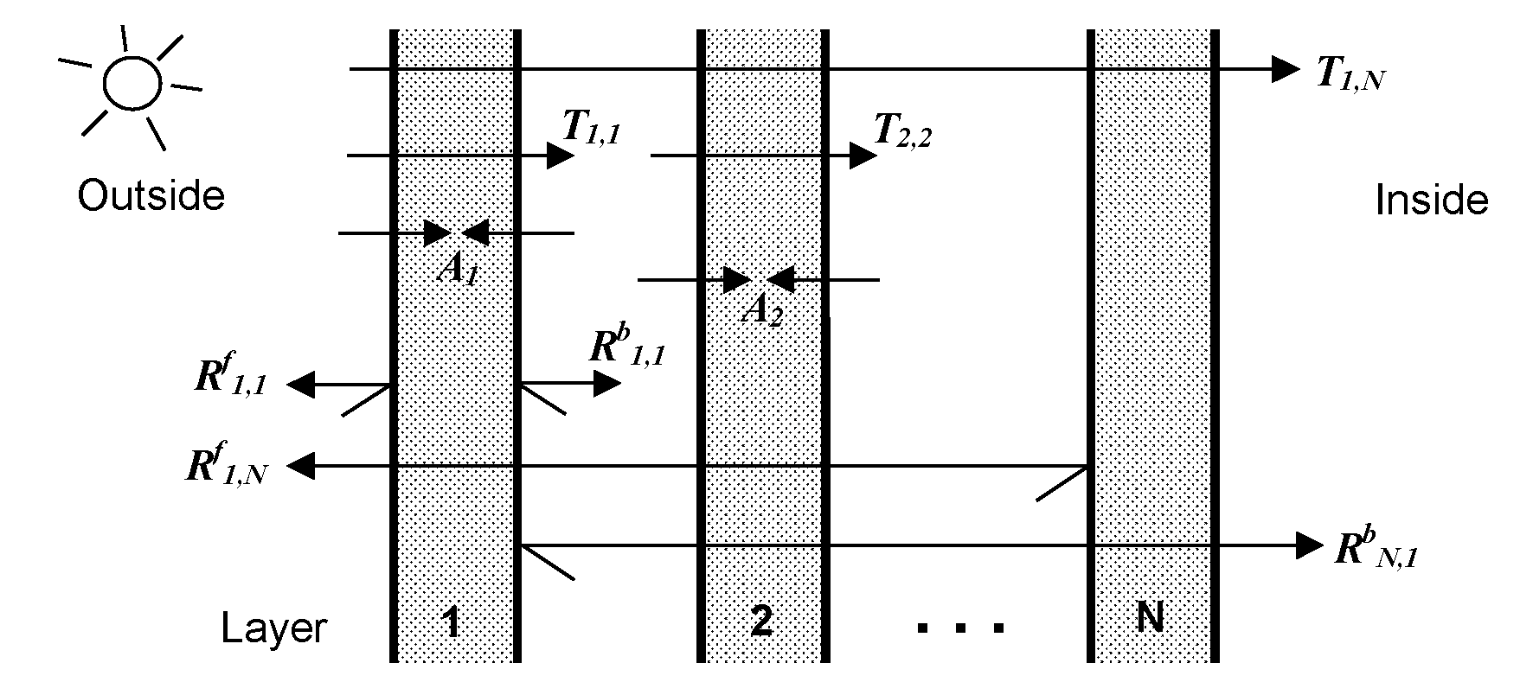
... and even more so with blinds/shades, frames, etc.
Contrary to opaque constructions (e.g. walls), isolating a conduction-only component (vs long-wave radiation or convection) in a multilayered glazing assembly is not really feasible. I guess one can always approximate effective (or equivalent) glazing "conduction" by tracking over time the evolution of outside surface (S1) vs inside (S4) temperatures when the sun is set. Otherwise ...
I hope this is of some help ...


