
Question-and-Answer Resource for the Building Energy Modeling Community
 | 1 | initial version |
Not a definitive answer (to Question 3), by any means.
I've helped modellers go from IES VE to OpenStudio (via GBXML), and back:
Tricky, but doable. The key was linking matching objects (in both files) using thermal zone and surface names (strings), which were fairly well preserved throughout the process. This would be much easier going from IDF > OSM > IDF. How straightforward this may be for you would depend on the nature of geometric changes, e.g.:
Some of these changes can be of course scripted, depending on the situation. Curious, can you give a few examples of some of the geometry editing features you're looking into?
FYI, I try to maintain a Python version of a Ruby gem we use, OSut (see pyOSut). It supports some geometry-based editing like adding skylight wells (e.g. through plenums and attics):
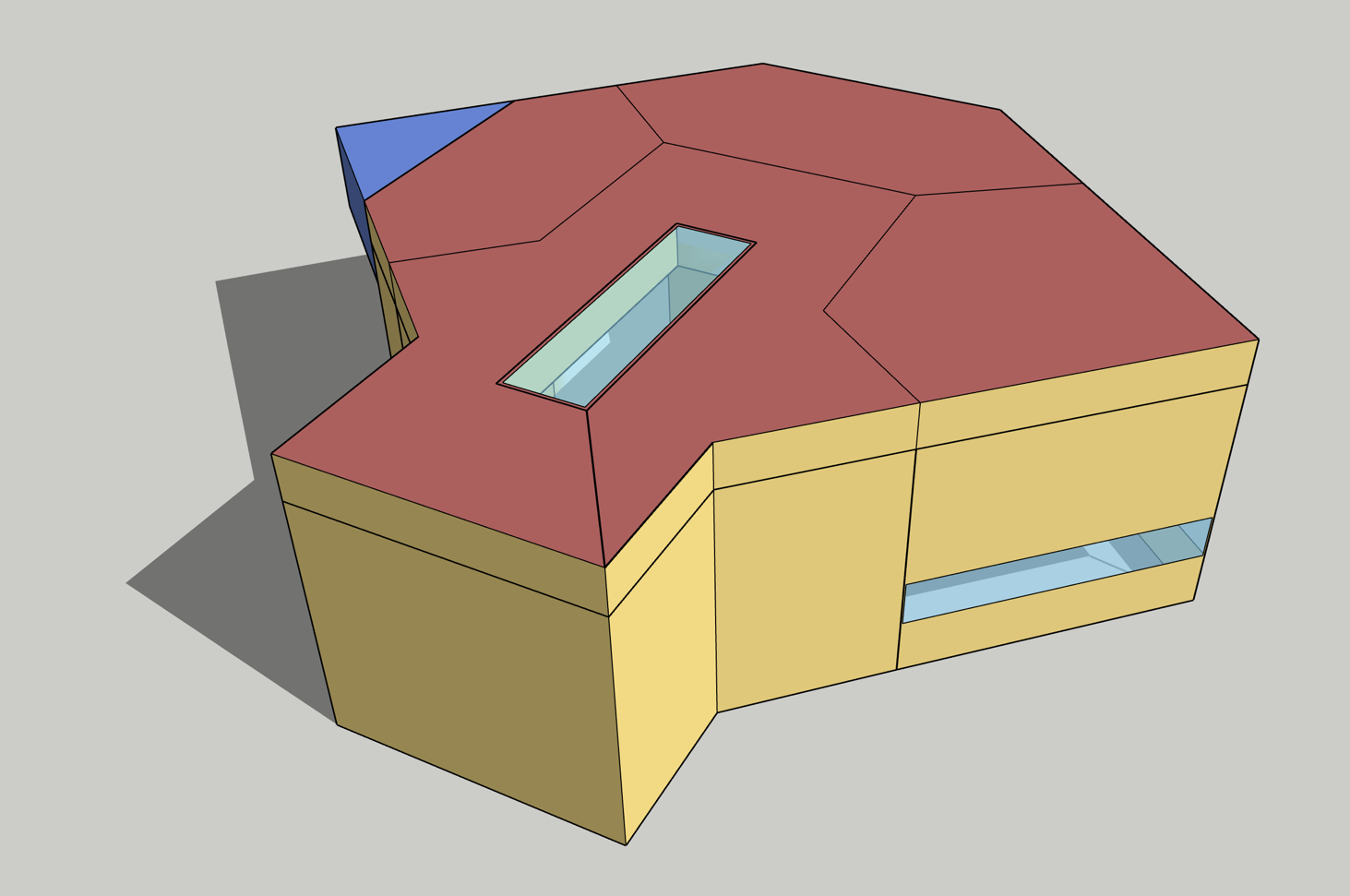
It's BSD-3 licensed, so you're free to use it within an OpenStudio environment, or even fork it and modify it to directly support IDF editing.
My 2-cents.


